
Writing descriptions for hundreds of products often means moving between specification sheets, supplier documents and an existing website. AI can turn those inputs into readable copy. If the sources disagree, it can also distribute the same mistake across many pages at once.
Preparation therefore needs more than an instruction to “make it persuasive.” Define where facts come from, which attributes must never be guessed, and who accepts the text before publication. This matters especially when similar products differ by size, colour, variant or included accessories.
Separate verified facts from the way they are expressed
Keep product identifiers, models, materials, measurements, units, pack contents and verified conditions in a controlled source. Sentence structure, explanation order and tone are drafting choices. Separating them lets a writer improve the wording without quietly changing the specification.
Establish which source wins when records conflict, such as a specification table approved by the product owner. If a supplier sheet and the current website list different dimensions, send the discrepancy for a decision. Do not ask the model to choose whichever value seems plausible or average the figures.
Each field should distinguish verified, not applicable and unknown. A blank does not mean the product lacks an attribute. It also does not authorise a model to fill the gap with a feature commonly associated with similar products.
Examine one bag before generating a catalogue
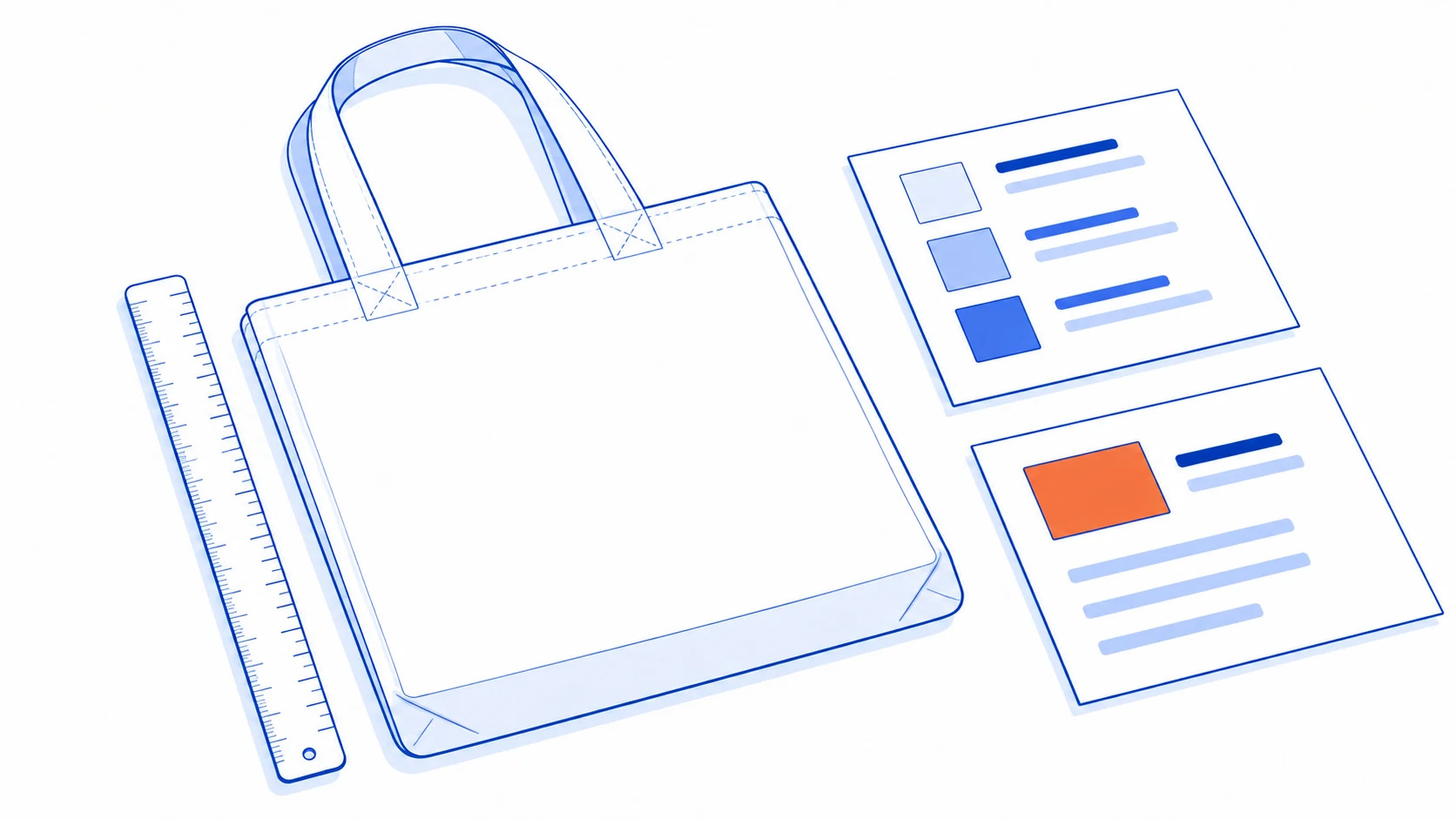
Suppose the verified data for a tote contains only its model, material, dimensions and colours. A description can explain those details. Claims such as waterproof, heavy-duty or suitable for every laptop need additional support; they do not follow from seeing a picture of the bag.
| Possible generated statement | Evidence to check | If the information is unavailable |
|---|---|---|
| Fits a laptop | Opening, internal dimensions and model limitations | Remove the claim or request verification |
| Waterproof and easy to clean | Manufacturer-supported material properties and care instructions | Do not infer from appearance or a similar material |
| Includes a complete accessory kit | Contents attached to that exact product identifier | List only confirmed items |
| Every order arrives within the same period | Delivery conditions and current fulfilment information | Retrieve delivery information from its responsible system |
Useful copy does not need an accumulation of praise. Buyers may need to know where a measurement was taken, what is included, and what limits apply. Answering those questions from evidence is more informative than calling every product “premium quality.”
Build a path from source data to accepted copy
Start with a product group that has complete, reasonably consistent records. Define the necessary fields for that group and separate incomplete items before drafting. Do not force a description for every row merely to improve a completion count.
During drafting, restrict the supplied source material and require specification statements to remain traceable to their fields. Define names, units and material terms that must stay consistent, alongside claims that need explicit evidence. These instructions make review easier, but they are not proof that the model will always comply.
Separate two types of checks. Deterministic comparisons can check product identifiers, numbers, units, required fields and accidental exchanges between variants. Human review handles meaning, readability, implied claims and whether the explanation suits the intended customer.
Shopify's description-generation guidance warns that generated copy may introduce benefits or facts that were not provided, and leaves accuracy with the merchant. A drafting feature built into a commerce platform still needs a review step before publication.
Both languages need the same factual foundation
Thai and English descriptions should refer to the same product identifier and specification version. Translating embellished sales copy can carry an original error into another language. Retain the checked source text and the product data used for each edition.
Keep model names and specialised terms consistent. Similar-sounding claims can differ materially: water-resistant and waterproof should not be treated as interchangeable. Where units are converted, establish the conversion and rounding approach from verified values rather than letting each page improvise.
The two languages do not need identical word counts. They do need matching limitations, included items and important conditions. A fluent translation that omits a restriction is incomplete. Review the important fields across languages rather than comparing paragraph counts alone.
Protect copy that has already been checked
When specifications change, identify which pages used the earlier version and which statements need review. Show the differences between the current and proposed description before replacing an approved set of pages.
Frequently changing prices, stock and delivery estimates should be supplied by their responsible systems in appropriate parts of the page. Embedding temporary values in generated prose makes them easy to leave behind even when the rest of the store updates correctly.
Before publishing, verify the relationship between each product identifier and its destination page. Accurate copy attached to the wrong variant is still incorrect. Keep the previous descriptions and an explicit list of changed records so an affected group can be restored without undoing unrelated work.
Acceptance needs more than correct spelling
A useful trial includes similar variants, incomplete records and conflicting source documents. Check that the workflow can stop and request information rather than inventing attributes to complete the text. Count descriptions requiring factual corrections separately from those requiring only style changes, and include reviewers' time.
If facts need repair on most items, improve the source before increasing volume. If facts are stable but the wording misses the brand, refine writing examples and terminology. Accepted descriptions should be clear, retain limitations and remain traceable to the information used to produce them.
When product information first needs to be extracted from varied documents, read about AI document extraction and human review. If an existing platform may already cover the workflow, use the buy-or-build decision guide before commissioning additional software.
Too many products to keep writing each page by hand?
Talvyn Labs can help structure source data, design bilingual drafting and add specification checks before descriptions reach your website or store. Start with a well-documented product group to evaluate the workflow.
Plan an AI product content workflow