
The lowest quoted price may not be comparable with another offer. Selling units, minimum quantities, delivery conditions and included services can differ. Procurement work therefore starts by putting offers on a consistent basis before selecting a supplier.
An AI agent can help prepare that comparison: read proposals, populate a table, retain links to the original evidence and collect questions that need a response. A useful first release makes differences easy to inspect while keeping supplier selection with the authorised decision-maker.
Follow one set of offers from intake
Consider an illustrative purchase of business equipment. One supplier quotes by the box, with six items in each box. Another quotes per item and applies a minimum order quantity. One starts its delivery period after receiving a purchase order; another starts after receiving payment. The same stated delivery duration may therefore describe a different commitment.
Start by matching each offer to the correct request and document version. Show the original selling unit beside the normalised unit. If the number of items in a box is not evidenced, mark the unit-price comparison as incomplete. Guessing that value would make the table look finished while concealing the problem.
This is an illustrative design scenario, not a Talvyn Labs customer case or a claim about measured results.
A comparison must expose what cannot yet be compared
| Question | Original information to retain | What the system prepares | When review is needed |
|---|---|---|---|
| Is it the requested item? | Model, specification and included items | A match to the purchasing requirement | A similar model is not confirmed as an acceptable substitute |
| What does the price cover? | Amount, currency, selling unit and pack size | A conversion using verified inputs | Pack size or price inclusions are missing |
| How much must be ordered? | Minimum quantity and quantity breaks | The actual order quantity needed | The offered quantity differs from the requirement |
| When and where will it arrive? | Lead time, starting event and destination | Comparable delivery conditions | Availability or timing is unconfirmed |
| What other terms apply? | Validity, warranty and exclusions | A list of differences | A condition is ambiguous or outside the reviewer's authority |
Oracle's negotiation-line documentation treats pricing, quantities, delivery and alternatives as distinct purchasing information. A custom comparison should preserve those distinctions rather than compressing everything into a short narrative.
Use verifiable calculations for normalisation. A unit conversion needs an approved multiplier; a currency conversion needs an identified rate and date. AI can help locate a value in a document, but it should not invent a rate or a commercial condition absent from the evidence.
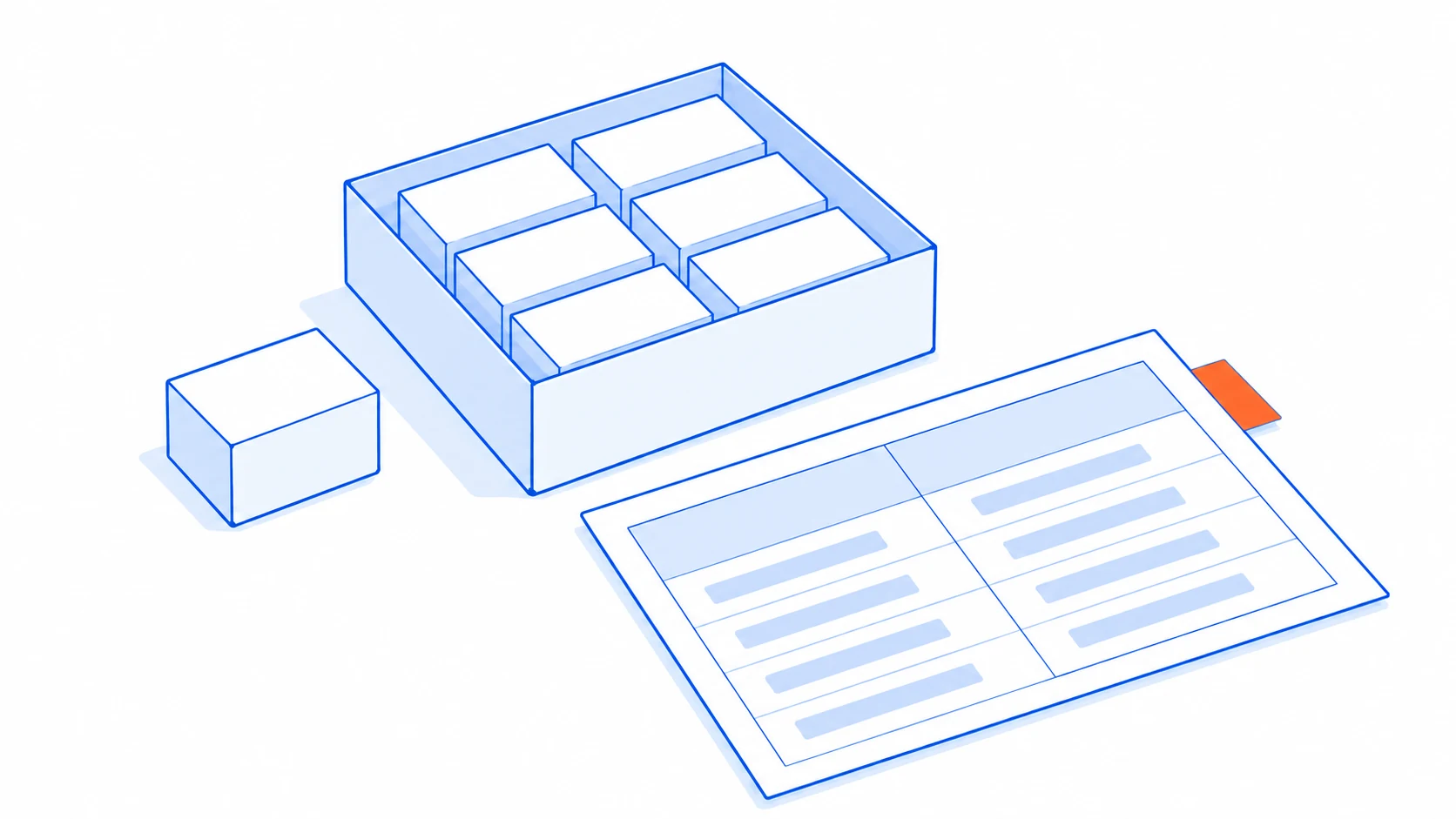
The review screen is a core part of the product
A buyer should be able to open the source page or passage from a table cell. Converted values should show their inputs and rules. When a revised offer arrives, highlight the changes and whether an earlier confirmation still applies to that version.
Separate states such as extracted and awaiting review, missing information, conflicting information and confirmed. A high confidence score should not become automatic approval. Microsoft's guidance on Document Intelligence confidence concerns extraction results; its use needs assessment against the documents and requirements of the actual task.
For example, a price may be read correctly but matched to the wrong requested item. Text extraction, line matching and interpretation of terms are separate checks. Combining them into one score can hide the part that needs improvement.
The buyer also needs a manageable way to correct the result. Preserve the original value, the replacement, the reviewer and the reason. A correction should be visible to later reviewers, rather than silently overwriting the evidence used in an earlier decision.
Decide where an agent adds value
File intake, version storage and arithmetic can follow deterministic steps. An agent may help interpret differently worded descriptions, identify what must be researched next or prepare questions for unresolved fields.
If suppliers always submit a complete, consistent form, extraction plus comparison rules may be sufficient. If offers arrive in different formats with multiple attachments, assess whether an agent needs to select additional documents or tools. Every calculation does not require a model decision.
Where document reading is the main difficulty, see when AI document processing needs more than OCR.
Keep the reason for a purchasing decision
Define mandatory conditions first, such as a required specification, delivery deadline or necessary document. Keep those separate from factors used to rank eligible offers. The system can then distinguish an offer that fails a requirement from one that is simply missing information.
If scoring is used, assign an owner to the criteria and retain their version. Do not let AI improvise weights during the comparison just to produce a winner. When evidence is incomplete, a clarification list may be the appropriate output.
A review package should show advantages, limitations, unresolved facts and the buyer's decision. Tie approval to the exact offer versions reviewed. If a supplier later changes a condition, the system needs to make that change visible rather than carrying the old approval forward silently.
Limit actions before connecting the purchasing system
Let the first release read and prepare comparisons. Sending questions to suppliers, creating purchase orders and changing supplier records are separate actions with their own permissions and approvals.
OWASP's Excessive Agency guidance addresses excessive tools, permissions and autonomy. Reading only the information required for a task and confirming consequential actions should therefore be part of the initial scope.
When a request is sent but its response is lost, check the destination before retrying. A missing response does not establish that an order was never created. The integration needs an operation identifier and a recovery path that avoids duplicate records.
Accept the system against difficult offers
Include poor scans, tables crossing pages, inconsistent selling units, similar product variants and revised offers in the test set. Check extraction, matching, calculations and detection of missing information separately.
Measure the time from receiving offers to a package the buyer accepts for comparison. Include corrections and requests for clarification. Define unacceptable failures, such as confusing suppliers or creating an order before approval, as explicit stop conditions.
Talvyn Labs can develop the comparison interface, evidence review and integrations around your purchasing process. Bring redacted offers, approval steps and the destination systems to scope a working procurement AI product. For the process after ordering, see matching purchase orders, receipts and invoices.
Turn supplier quotations into a comparison your buyers can use
Bring authorised sample quotes and selection criteria to Talvyn Labs. Scope a tool for extraction, comparison and evidence review around your purchasing process.
Build your procurement AI tool