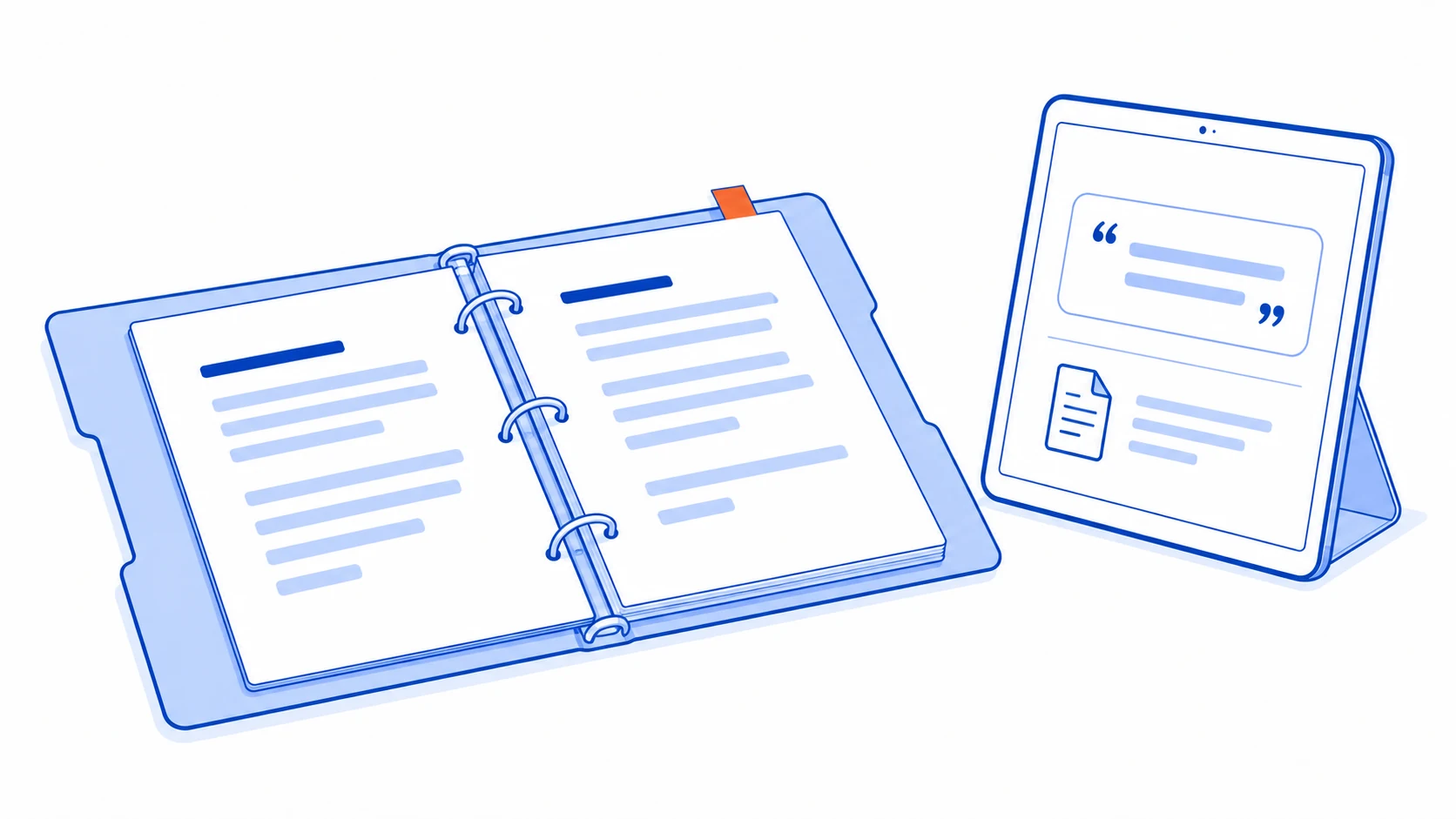
Before AI answers from company documents, prepare representative questions, verified sources with named owners, access rules and answer checks with supporting references. Trial one document collection first so the team can identify gaps and decide who maintains it when information changes.
“Can AI read our company documents?” is usually the easy question. The harder one is what it should do when two documents disagree, and who can confirm which answer is still valid.
Before choosing a tool, take a question employees actually ask and trace it back to its source. That exercise reveals the quality of the information, the access rules and the maintenance work needed after launch.
Start with questions, not a file count
Imagine a support team being asked where a customer should request an exchange for an item bought through a distributor. The answer might depend on the service policy, partner instructions and a recent process update. Having all three files does not tell the system which sales channel applies or which passage the update replaces.
Write down representative questions with the context needed to answer them: who is asking, which product or service is involved, and when the relevant event occurred. Ask the process owner to identify an acceptable answer and the evidence supporting it. If the team cannot agree, resolve that uncertainty before treating the documents as a reliable knowledge base.
Include ambiguous questions, questions the documents cannot answer, and requests for information the user is not allowed to see. These reveal whether the system can ask for clarification or decline to answer appropriately.
Create a source register someone can maintain
A simple spreadsheet is enough to begin. Its purpose is to identify the authoritative source for each subject and the person who can confirm it, not to move every file into a new platform immediately.
| Record | Decision it supports |
|---|---|
| Subject and original file location | Open the actual passage for checking |
| Content owner | Know who can approve a correction |
| Effective date and version status | Decide whether the information still applies |
| Permitted readers | Establish who may receive the answer |
| Scope and exceptions | Avoid applying a rule to the wrong situation |
When a revised manual arrives, do not simply add it beside the old one as an equally valid source. Record whether the earlier version has been fully replaced, withdrawn, or retained for a defined category of older cases.
Preserve the meaning when preparing the files
A PDF that is readable on screen may contain only scanned images. A clear visual table can lose the relationship between column headings and values during extraction. Process a representative sample and inspect the result before loading the whole collection.
For long manuals, keep section context and exceptions connected to the relevant instruction. Separating “a team leader may approve” from the condition that limits that authority can produce an answer that sounds confident but applies the rule incorrectly.
Treat translated versions carefully too. If the Thai manual has been updated while its English equivalent is out of date, record that difference or restrict answers to a version the owner has confirmed. A shared title does not make two files interchangeable.
Retrieval-augmented generation, or RAG, retrieves relevant material and provides it to a model as context. It still depends on well-prepared sources and appropriate access controls; it does not resolve contradictory policies by itself. Microsoft Learn explains the RAG approach.
Specify what a verifiable answer contains
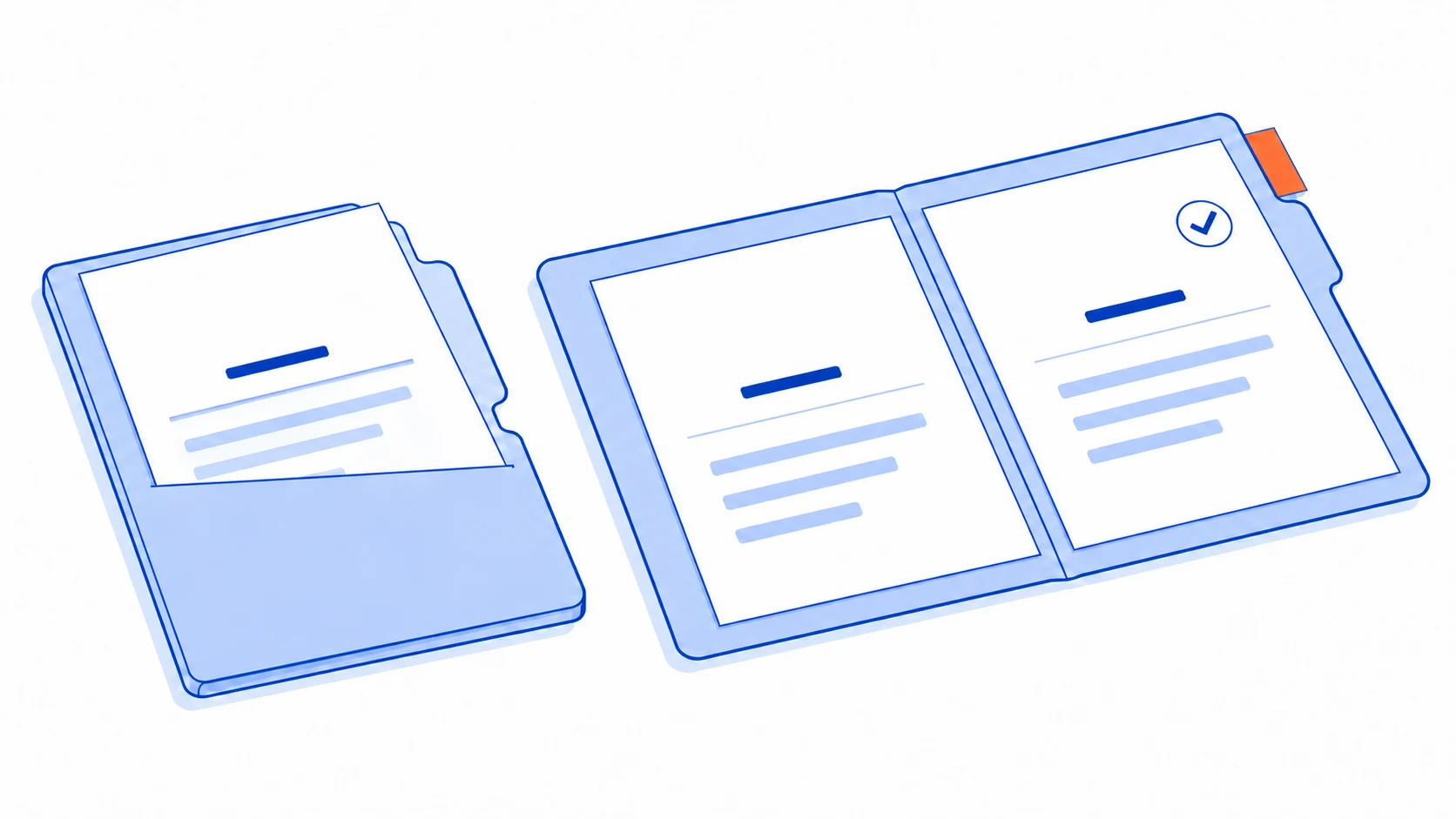
“Answer like a person” is a difficult acceptance criterion. Instead, specify the useful parts of an answer: a conclusion, important conditions, supporting references and any missing information. A reference should point to material that actually supports the statement, rather than a long document containing similar words.
In the illustrative distributor example, a suitable answer might explain that the contact route depends on the distributor category, ask where the purchase was made, and cite the manual section used to decide. If that distributor is not covered, the system should hand over the question and the evidence it found instead of inventing a policy.
The handover should explain the unresolved point. “Two active sources disagree” or “this product version is not covered” gives the employee something to fix in the knowledge base. A generic failure message leaves the same question waiting for another manual answer next time.
Test retrieval, answers and access separately
An incorrect answer can result from failing to retrieve the right document or from misinterpreting a document that was retrieved correctly. The remedies differ. The first may require better source preparation or retrieval; the second may require clearer conditions and response instructions.
Have a subject expert assess the prepared question set. Record whether the reference supports the answer, whether any statement lacks evidence, and whether clarification or a handover was needed. Test each supported language independently. Passing an English test does not establish that Thai answers are reliable, or vice versa.
Use accounts with different permissions to check access. Material a person cannot read should be excluded before it becomes answer context. Hiding the citation afterwards does not prevent confidential information from appearing in the response itself.
Plan for the day a source changes
Decide who approves a replacement manual, when it enters the system, and how the team checks that the obsolete version is no longer being used. There should also be a way to withdraw an incorrect source without waiting for a full application change.
Capture unanswered questions and staff corrections so they can improve the sources and future tests. Keep only the information needed to investigate the problem. Measure supported answer quality and the review effort required, rather than simply counting how many messages the system answers.
The preparation should leave four usable deliverables: real questions, a source register, rules for answering and handing over, and named content owners. Together, they make the difference between a demonstration that can read files and a knowledge service the team can maintain.
If your sources include scans or complex tables, read about AI document extraction and human review to protect the meaning of information before it enters the knowledge base.
Put company knowledge to work with answers your team can check
Talvyn Labs builds AI tools for finding and answering from company documents, with supporting references, access rules and human handovers. Start with recurring questions and documents you are allowed to share. Together, we can define a pilot and the checks an answer must pass.
Discuss document AI